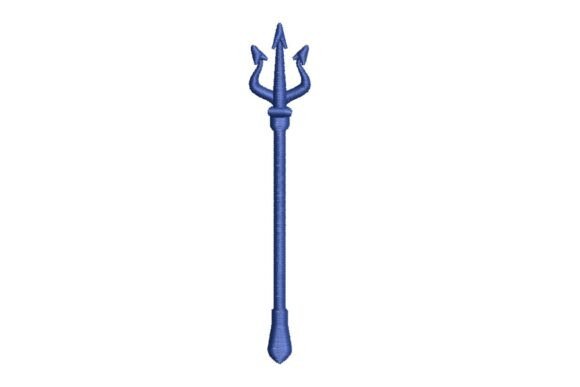
Nautical Trident Embroidery Design
First Impressions: Power, Precision, and Coastal Confidence
As an embroidery designer who’s stitched for boutique brands from Malibu to Maine, my first glance at the Nautical Trident Embroidery Design stopped me mid-thread-cut. It doesn’t whisper—it commands. That long, textured shaft suggests intentional weight and dimension, while the three-pronged head carries both mythic gravitas and clean, balanced geometry. This isn’t a cartoon trident or a watered-down icon—it reads as authentic, grounded in nautical tradition but built for modern apparel. The mood is bold yet refined: maritime strength without aggression, timeless without stiffness. On a sweatshirt, it lands as premium—not costume-y, not kitschy, and definitely not generic.
How It Lives on Sweatshirts: From Chest Placement to Seasonal Storytelling
I tested this design mentally across six real-world sweatshirt contexts—and every one held up. On a heather charcoal hoodie? The trident reads with quiet authority, its texture catching light like weathered teak. On a creamy oatmeal crewneck? It gains warmth and artisanal softness—ideal for a coastal cottagecore brand. A blush-toned oversized sweatshirt? Surprisingly elegant—the trident’s symmetry grounds the pastel, adding structure without harshness. For a limited winter drop, I’d place it centered on the back of a heavyweight French terry hoodie: large-scale, slightly elongated, letting the shaft’s “textured” quality translate into rich stitch variation. And yes—it works beautifully on sleeves too: scaled down 30%, rotated 15°, placed just above the elbow on a relaxed-fit pullover. That subtle placement says “intentional detail,” not “afterthought.”
Design Personality: Bold, Balanced, Boutique-Ready
The Nautical Trident Embroidery Design sits confidently between categories. It’s bold in symbolism and silhouette—but minimal in line economy. It feels premium because of its implied craftsmanship (that “textured shaft” cues high-density fill or strategic satin stitch layering), yet remains casual enough for everyday wear. It leans masculine in heritage, but the clean execution makes it fully unisex—especially when paired with soft fabric textures and thoughtful thread colors. It’s not cute, not rustic, not playful—this is decorative with purpose: each prong serves balance; each curve implies motion. For a small shop building visual recognition, that consistency matters. Customers will spot it across your Instagram feed, your Etsy banner, your pop-up booth—and instantly associate it with quality, cohesion, and coastal confidence.
Why It Elevates Boutique Branding (Beyond Just Stitching)
When your handmade product carries a symbol this loaded—sea deities, naval strength, elemental power—it quietly raises perceived value. Buyers don’t just buy a sweatshirt; they buy a piece of narrative. That builds trust faster than any “hand-stitched with love” tagline. For an Etsy seller or small shop product, that resonance translates directly to engagement: longer dwell time on listings, higher save rates, stronger repeat customer signals. In lifestyle photography, the trident holds up against natural light, sand textures, and linen backdrops—no visual competition, just calm authority. As a digital embroidery file, it also scales cleanly for printable mockup use: whether you’re showing it on a draped model shot or a flat-lay with seashells and sea glass, it reads clearly at thumbnail size. That’s rare. That’s valuable.
Real Designer Considerations: Thread, Fabric, and Longevity
Let’s talk production reality. For sweatshirt embroidery, thread color contrast is non-negotiable—and this design rewards intentionality. Navy thread on ivory fleece? Crisp and classic. Deep burgundy on charcoal? Unexpectedly luxe. Avoid low-contrast combos (e.g., light gray on heather gray) unless you want the texture to fade visually. Stitch density matters here: that “textured shaft” implies layered fills or variegated satin stitches—so confirm the machine embroidery design includes adequate underlay and proper stop points. Too dense, and it’ll stiffen lightweight French terry; too sparse, and the prongs lose definition. Always pair with medium-weight cutaway stabilizer—sweatshirts move, stretch, and wash. Test on scrap fabric first, especially if using eco-blends or brushed cottons where nap can obscure detail.
Hoop size and placement are intuitive: chest placement (3.5–4.5” wide) balances proportion on most adult sizes. For oversized hoodies, consider center-back placement at 5.5–6”—the shaft’s vertical rhythm plays beautifully with drape. Small-size readability? At 2.75”, the prongs remain distinct—no merging, no bleeding—if digitized with appropriate jump stitch management. Washing durability hinges on stitch integrity, not just thread quality: ensure the embroidery file avoids long, unsupported satin runs on the prong tips. A well-built Nautical Trident Embroidery Design should survive 30+ cold washes with zero fraying or puckering—critical for commercial embroidery credibility.
Final Thought: More Than a Symbol—A Signature
This isn’t just another hoodie design. The Nautical Trident Embroidery Design functions as a signature—clean enough for minimalist branding, strong enough for statement merch, versatile enough for custom apparel across genders and seasons. It belongs in the Beach category, yes—but transcends trend by anchoring itself in archetype. For the embroidery shop sourcing design assets, the crafters building seasonal collections, or the creative entrepreneurs launching their first boutique brand, it’s a rare find: a symbol that stitches well, sells well, and stays true. Before production, always verify hoop size, file format compatibility, and license terms for commercial embroidery use—but know this: when executed right, the Nautical Trident Embroidery Design doesn’t just decorate fabric. It defines identity.