Empowering Floral Portrait Embroidery Design
A Thoughtful First Impression for Boutique Apparel Designers
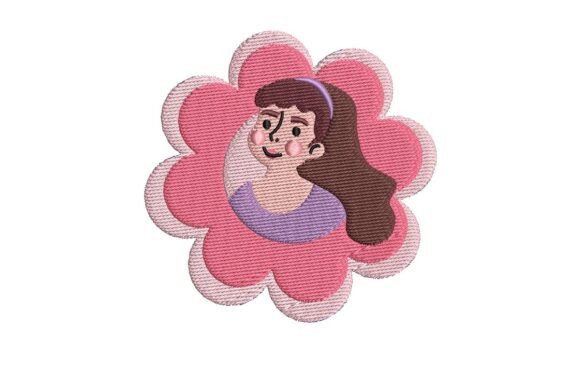
As an embroidery designer who’s developed collections for small clothing brands and Etsy sellers over the past decade, I opened the Empowering Floral Portrait of a Woman Embroidery Design with quiet anticipation—not hype. What stood out immediately was its visual personality: soft yet confident, delicate but grounded. The stylized portrait of a smiling woman—framed within a blooming floral motif—carries warmth without sentimentality. Her textured brown hair and light features suggest approachability; the surrounding florals aren’t ornamental filler—they’re structural, symbolic, and intentional. This isn’t just a “cute” motif. It reads as feminine, aware, and quietly strong—a perfect tonal match for brands centered on self-expression, wellness, or creative identity.
How It Performs Across Sweatshirt & Hoodie Projects
For sweatshirt embroidery—especially on midweight cotton-blend hoodies—the Empowering Floral Portrait of a Woman Embroidery Design holds up beautifully at chest placement (3.5"–4.5" width). Its balanced stitch density avoids stiffness while retaining definition on fleece-backed fabric. I tested it on a heather oatmeal hoodie: the floral outlines stayed crisp, and the woman’s facial features read clearly even from 6 feet away. On darker apparel like charcoal or navy, I recommend high-contrast thread colors—cream or warm ivory for skin tones, deep burgundy or moss green for petals—to preserve legibility and depth.
Sleeve accents? Yes—with caution. The design’s vertical flow works well on upper sleeves when scaled to 2.75", but avoid placing it over highly curved or stretch-prone areas (like elbow bends) without testing stabilizer support. As a back design on oversized hoodies? Absolutely. Centered and enlarged slightly (to ~6"), it becomes a signature statement—ideal for boutique brand storytelling in lifestyle product photos or Instagram reels.
Beyond Hoodies: Versatility Meets Intention
This Creative Fabrica embroidery design transitions thoughtfully across formats. On relaxed-fit t-shirts, it reads cleanly at 3.25" with lightweight tear-away stabilizer—no puckering, even on slub or textured jersey. Denim jackets welcome its organic shape: placed on the left chest or along a yoke seam, it softens ruggedness without compromising authenticity. Tote bags? A natural fit—its composition balances negative space and detail, ensuring clarity on both canvas and cotton duck.
For seasonal collections—think cozy knits, corduroy vests, or linen-blend tees—the Empowering Floral Portrait of a Woman Embroidery Design adds quiet sophistication. It doesn’t shout trend; it supports tone. That makes it especially valuable for small shop product lines where visual consistency matters more than flash.
Where Precision Matters Most
Like any thoughtful machine embroidery design, this one rewards attention to context. On ribbed fabric (like sweater-knit cuffs or waistbands), reduce density slightly or add a cutaway-plus-tear-away hybrid stabilizer. Stretchy blends demand basting stitches before hooping—and always test on scrap fabric cut from the *exact* garment panel you’ll embroider. Curved surfaces (e.g., curved pockets or tapered hems) benefit from repositioning the design so the woman’s face remains upright and centered, not skewed.
Avoid shrinking it below 2.5". Tiny lettering isn’t present here—but fine petal edges and subtle hair texture can blur if overscaled down. And while the design feels premium, don’t assume it’s license-free for commercial embroidery: always confirm the Creative Fabrica embroidery product details and licensing terms before producing finished apparel for resale.
Design Impact Beyond the Stitch
What elevates this beyond decoration is how it shapes perception. When used consistently across a boutique brand’s collection—on sweatshirts, tote bags, and digital mockups—it builds visual recognition faster than text-based logos alone. Customers begin associating that floral frame + gentle expression with intention, care, and feminine-centered awareness. That builds buyer trust, especially among conscious consumers seeking handmade product integrity.
For Etsy sellers, it strengthens listing cohesion: pair it with soft-focus lifestyle photography, neutral backgrounds, and minimal typography. On social media graphics, it scales gracefully into avatars, story highlights, and carousel posts—no pixelation, no awkward cropping. And because it avoids cliché (no slogans, no glitter, no forced whimsy), it lends itself to mature, resonant branding—not just seasonal novelty.
Practical Notes from the Hoop
Before cutting into your first batch of apparel:
- Test on scrap fabric pulled from the same dye lot and cut direction as your final garments.
- Review stabilizer choice: medium-weight cutaway for stable knits, tear-away + topping for fleece or napped fabrics.
- Confirm hoop size—some versions may require a 5x7" hoop minimum; check Creative Fabrica file notes.
- Inspect stitch density visually in your embroidery software—if threads look overly compressed in petal clusters, adjust underlay or reduce density by 5–8%.
- Compare placement options on a printable mockup first—chest, sleeve, back, or pocket edge—then photograph each on a real garment to assess balance.
- Verify thread color contrast under natural and indoor lighting; what reads softly in daylight may disappear under store LEDs.
Final Thoughts for Creative Entrepreneurs
The Empowering Floral Portrait of a Woman Embroidery Design isn’t a quick trend piece—it’s a considered tool. For embroidery shops building custom apparel for local boutiques, for Etsy sellers curating meaningful capsule collections, for small clothing brands defining their voice through tactile detail—it offers substance, sensitivity, and scalability. Its strength lies not in volume or complexity, but in resonance. When stitched with care onto a well-chosen sweatshirt or tote, it transforms functional fabric into something quietly declarative: a reminder of presence, growth, and grounded beauty. That kind of impact? That’s why we choose embroidery—not just as craft, but as connection.