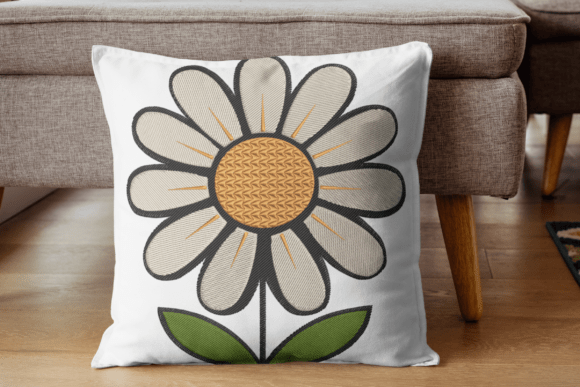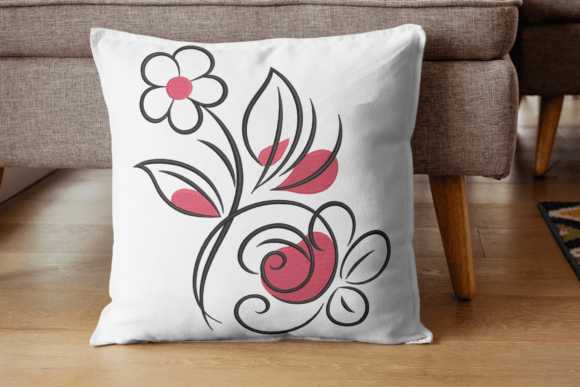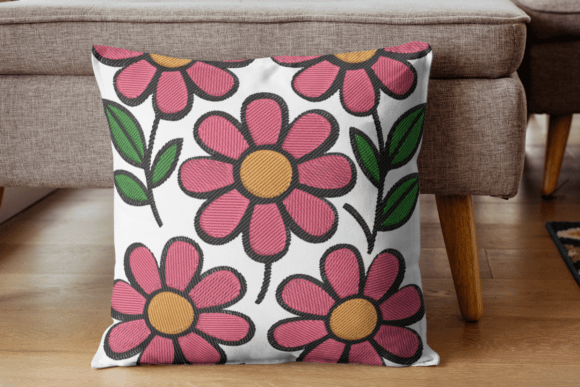
Pink Daisy Floral Embroidery Design
A Timeless Floral Touch—But Does It Work for Your Brand?
As an embroidery designer who’s developed hundreds of commercial machine embroidery designs for small businesses—from neighborhood bakeries to indie florists—I approached the Pink Daisy Floral Embroidery Design with a practical eye: not just “Is it pretty?” but “Will it build trust, scale across products, and hold up in real-world production?” The title and description promise elegance and timelessness—and yes, this design delivers that at first glance. It reads as friendly yet refined, handmade but professional, classic without feeling dated. That balance is rare—and invaluable for small business merch.
Where This Design Shines in Real Business Use
The Pink Daisy Floral Embroidery Design excels where subtle brand presence matters most. Think apron embroidery for a boutique café—stitched just above the pocket, soft pink threads catching light without shouting. Or cap embroidery on structured cotton twill: the daisy’s open center and gentle petal curves translate beautifully to curved surfaces when digitized well. On tote bags made from medium-weight canvas, it reads clearly at 3.5” wide—neither overwhelming nor lost. As an embroidered patch, it works especially well when backed with heat-seal or Velcro for easy application on staff uniforms or reusable shopping bags.
For Etsy sellers and handmade brands, this design strengthens visual consistency across product lines. Pair it with neutral-toned packaging accents—say, a single daisy stitched onto kraft paper gift tags or linen pouches—and you reinforce a cohesive, artisanal brand identity. In custom apparel for local studios or pet brands, it adds warmth without sacrificing polish. And because it belongs to the Single Flowers category, it avoids visual clutter—ideal for chest logos, sleeve details, or minimalist product labels where space and clarity are limited.
Where Caution Is Required
Like any elegant floral motif, the Pink Daisy Floral Embroidery Design demands thoughtful execution—not just creative intent. Its delicate petal outlines and potential stitch density mean it may struggle at very small patch sizes (under 2”). If your business relies on 1.75”-diameter cap fronts, test scalability early. On dark uniforms or textured fabrics like terry cloth or heavy denim, contrast becomes critical: pale pink thread may vanish unless paired with a white underlay or slightly brighter tone. Also, avoid placing it on high-wear zones like elbow patches or tote bag handles unless the embroidery file includes reinforced under-stitching—frequent washing can soften fine details over time.
Remember: “elegant” doesn’t always equal “low-maintenance.” If your digital embroidery file lacks clean jump stitches or optimized pull compensation, you’ll see thread nests on knits or puckering on lightweight chambray. Always verify how the design behaves on your target fabric *before* bulk production.
How It Shapes Brand Identity and Customer Perception
This isn’t just decoration—it’s quiet brand storytelling. A well-placed Pink Daisy Floral Embroidery Design signals care, approachability, and attention to detail. Customers associate that floral softness with authenticity—especially in handmade product spaces. When stitched on aprons for a local florist or embroidered patches sewn onto ceramic studio packaging, it elevates perceived value without raising price points. That subtle reinforcement builds recognition: repeat customers begin to associate the daisy with your shop’s warmth and reliability.
For merch creators and apparel decorators, consistency is key. Using the same Pink Daisy Floral Embroidery Design across staff caps, tote bags, and product hangtags creates rhythm and cohesion—something buyers subconsciously register as professionalism. It also supports cross-channel alignment: pair a printable mockup of the design on your website with real-life photos of embroidered merchandise, and conversion lifts follow. That’s the power of a single, versatile machine embroidery design done right.
Practical Designer Notes Before You Stitch
- Test in black and white first. Print the design outline to assess proportion, spacing, and flow—especially if combining it with text or other design assets.
- Check small-size performance. Resize digitally to your smallest intended use (e.g., 1.8” for cap fronts) and zoom in: do petal tips stay crisp? Are negative spaces legible?
- Review thread color contrast. Pink on ivory linen? Lovely. Pink on navy twill? May need a white fill or outline to pop.
- Inspect spacing and density. Overly tight satin stitches won’t lay flat on stretchy fabric; overly sparse fills look unfinished on heavy canvas.
- Confirm hoop size and stabilizer needs. Floral motifs often require medium cutaway stabilizer on knits—or tear-away with topping on fleece—to prevent distortion.
- Always test on real fabric. A $5 swatch saves hours of re-hooping and re-threading later.
- Create a client-approved mockup. Show the Pink Daisy Floral Embroidery Design on a photo of the actual garment or patch material—not just a generic template.
- Compare beside your other design assets. Does it harmonize with your logo, typography, and brand palette—or compete with them?
- Verify commercial licensing. Since this is a digital embroidery file, confirm it permits use on goods sold to end customers—many hobbyist files prohibit resale.
Final Thought: Elegant Simplicity, Built for Business
The Pink Daisy Floral Embroidery Design isn’t flashy—but it doesn’t need to be. In the world of small business merch, consistency, clarity, and quiet confidence win. Whether used as an embroidered patch on a bakery’s delivery tote or as subtle apron embroidery for a botanical skincare line, it carries intention. It says, “We made this with care”—and that message, stitched cleanly and thoughtfully, is worth every thread.