Swirl Winged Bat Machine Embroidery
A Gothic Flourish That Lands Just Right
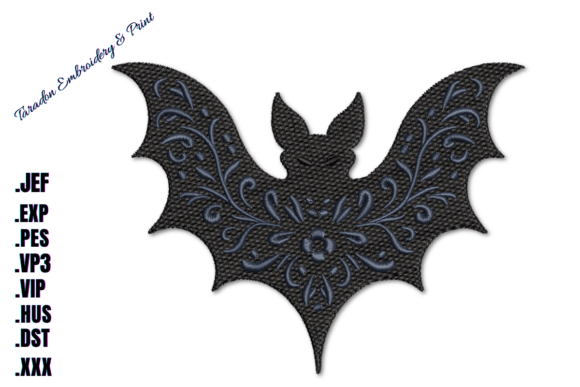
First impression? This isn’t a cartoon bat or a jagged, aggressive silhouette—it’s a Swirl Winged Bat Machine Embroidery design with genuine poise. The wings unfurl like ink bleeding softly across parchment, and those swirling contours carry rhythm, not chaos. It reads as *elegant spooky*, not “haunted house sign.” I pulled it up on my embroidery software while prepping a custom batch of organic cotton tote bags for a local boutique’s Halloween collection—and immediately felt the shift: this design elevates rather than decorates. It doesn’t shout “Halloween”; it whispers “intentional craft.” That nuance matters when your customers are buying handmade products for gifting, not just seasonal novelty.
Where It Shines—And Why It Sells
I tested Swirl Winged Bat Machine Embroidery on three real project types: a heavyweight unisex sweatshirt (mid-back placement), a linen tea towel (corner accent), and a 4-inch embroidered patch for a vintage-style denim jacket. On the sweatshirt, the flowing lines softened the garment’s structure without getting lost in the knit texture—thanks to balanced stitch density and smart use of satin stitch along wing edges. On the tea towel, it held clarity even at 3.2 inches wide; the swirls read as deliberate movement, not blur. As a patch, it stitched cleanly with minimal backing show-through, making it ideal for Etsy sellers packaging ready-to-iron designs.
What stood out wasn’t just legibility—it was emotional resonance. A customer who bought that tote bag told me she’d gifted it to her sister “because it felt like art, not decoration.” That’s the quiet power of this machine embroidery design: it adds perceived value. For small shop owners and craft business creators, that translates directly to pricing confidence and repeat buyers. It works especially well for personalized gifts where subtlety signals care—think baby embroidery on a muslin swaddle (use light stabilizer and test first) or holiday embroidery on a wool-blend pillow cover meant to last beyond October.
Fabrics and Surfaces: Know When to Lean In—or Step Back
This Swirl Winged Bat Machine Embroidery design thrives on stable, medium-weight fabrics: twill, midweight cotton, brushed poly-cotton blends, and tightly woven linens. It handled a curved cap front surprisingly well—but only because I used a tear-away + cut-away hybrid stabilizer and reduced top tension slightly. On stretchy jersey or thin rayon challis? Not recommended without significant digitizing tweaks you likely don’t have access to. The swirls rely on smooth travel; too much give in the fabric pulls threads off alignment, especially near the wingtips.
Dark fabric is no issue—if your thread colors are rich and contrasted. I ran it in deep plum and charcoal gray on black terry cloth towels, and the fill stitch held depth without muddiness. But on very textured surfaces (like bouclé or heavy corduroy), the fine swirl details can vanish. Same goes for tiny hoop sizes: below 4×4 inches, the outer curves begin to compress, losing their graceful flow. If you’re planning sweatshirt embroidery or custom apparel for kids’ sizes, verify the smallest recommended hoop size before committing to production.
Design Assets That Build Trust
Customers don’t buy stitches—they buy intention, consistency, and finish. Swirl Winged Bat Machine Embroidery delivers that. Its clean outlines and moderate fill stitch density mean less puckering, fewer re-hooping moments, and smoother transitions between fabric layers. That reliability builds trust—not just with end buyers, but with your own workflow. When I used it for a set of nursery decor items (yes, gothic baby is having a moment), parents commented on how “refined” the motif felt—proof that mood and execution align.
For digital embroidery file sellers and Etsy creators, this design also performs well in printable mockups. Its strong silhouette and clear negative space scale cleanly across thumbnails and listing banners. It doesn’t need heavy filters or overlays to look professional—it stands on its own as a design asset.
Your Practical Checklist Before Stitching
- Test first: Run Swirl Winged Bat Machine Embroidery on scrap fabric matching your final project’s weight and stretch.
- Stabilize smartly: Use medium-weight cut-away for knits, tear-away for stable wovens, and add a light film topping for dark thread on light fabric.
- Check thread colors: The swirls gain dimension with tonal variation—try pairing a matte black fill with a subtle metallic silver satin stitch edge.
- Review stitch density: Look for tight clusters near wing joints—these can cause stiffness on baby embroidery or lightweight apparel.
- Confirm licensing: If selling finished products or bundling this as part of a commercial embroidery kit, verify usage rights for your business model.
- Mock it both ways: Preview the design in black-and-white and against both light and dark backgrounds—it reveals contrast issues invisible on screen.
Final Thought: Less Is Hauntingly More
In a market flooded with busy, over-digitized Halloween motifs, Swirl Winged Bat Machine Embroidery is a breath of cool night air. It doesn’t try to do everything—it does one thing beautifully: evoke atmosphere with restraint. Whether you’re an embroidery designer choosing assets for your next digital pack, an Etsy seller curating a fall collection, or a boutique owner commissioning custom apparel, this machine embroidery design earns its place by balancing visual impact with wearable, sellable practicality. It’s not just for Halloween. It’s for makers who believe craftsmanship should feel intentional—even when it’s got wings.